











Supercharge your talent hiring. For our top tier clientele, we recommend this search option to achieve your toughest hiring requirements. Supercharge your talent hiring...

Part of the LHi Group family. Learn more
Part of the LHi Group family. Learn more

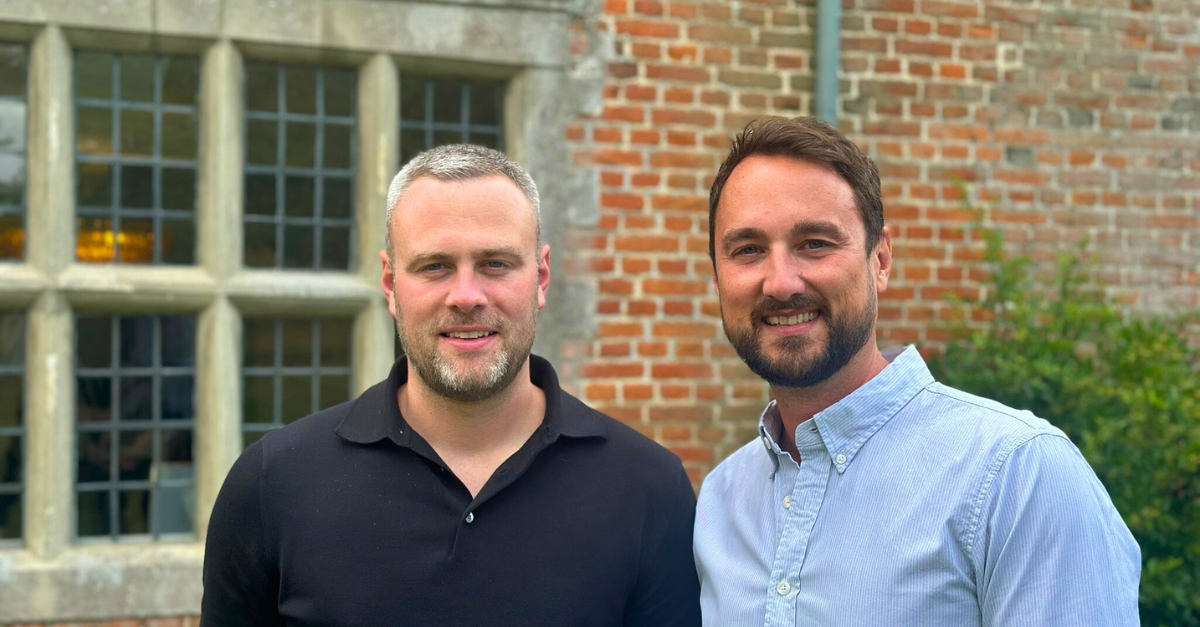
The Clean Energy Six, Finance Edition highlights the people working behind the financial and strategic decisions shaping the energy transition. In this series, Skye Shaffer, Associate Recruitment Consultant at Piper Maddox, speaks with professionals across the renewable energy finance ecosystem to explore their career journeys, the projects that have defined them, and the opportunities they see for the future of clean energy.
Our first guest is Samuel Woo, Senior Analyst, Investment Analytics at Cypress Creek Renewables. After serving as a Marine Corps officer overseas, Sam transitioned into renewable energy in 2022. Today, he focuses on evaluating and modelling renewable energy projects, helping ensure that the infrastructure being built today is both economically viable and designed to power homes and businesses for decades to come.
When did you start your career in renewable energy or clean tech, and why did you get into the industry?
I started my transition to clean energy in 2022. I was a Marine Corps officer at the time and was deployed in Syria in 2021 for about eight months supporting Operation Inherent Resolve, NATO’s mission to counter ISIS in Iraq and Syria.
I was operating out of a region known for a lot of oil extraction. The oil industry is a key part of that region’s economy, and seeing the fossil fuel industry up close - seeing the physical consequences of it - had a pivotal impact on me as I was figuring out my next professional steps.
At the same time, the Inflation Reduction Act was heavily in the news. Seeing the impact up close and hearing about the momentum happening in clean energy kind of lined up. I wanted to take the skills I learned in the Marine Corps and apply them to energy security, which I thought was really important.
Clean energy appealed to me because while every energy source has pros and cons, it wasn’t as pollutant as fossil fuels. So it was a combination of energy security and building something long-term that I felt was a net positive to the world.
What was a pivotal moment or project that defined your path in this industry?
One pivotal moment was driving through the region in Syria and seeing the pollution related to oil fields - waterways glistening with oil runoff, smoke in the air, fires tied to extraction. That definitely impacted me.
From a more recent perspective, I helped model four projects that we bid into an RFP with a major utility, and they were shortlisted. That was exciting because it’s the closest I’ve gotten to getting projects built. Modeling those four projects and getting them close to offtake reaffirmed why I’m in the industry - building long-term sustainable infrastructure that will last decades.
What excites you most about working in renewable or clean tech today?
It’s knowing I get to play a part in building infrastructure that will last decades - powering homes and businesses. Every project that moves toward COD or offtake is another step toward building resilient, diverse energy systems.
As energy demand increases, it’s good to know that part of our infrastructure is based on renewable, clean energy.
What is the biggest challenge you’ve faced in the renewable energy space, and what did you learn from it?
The biggest challenge was recommending the termination of a project for the first time. A big part of my job is evaluating project-level economics to make sure a project makes financial sense.
Terminating a project was tough because we join this industry to build renewable projects - not cancel them. But I learned that we can’t build projects randomly. There has to be strategy behind it. It has to make sense for the customer and for the company.
If projects don’t make economic sense, they can raise energy prices or hurt the company long-term, which limits our ability to build more projects. So I learned to understand the macro-level economics of each project and how it impacts the grid. It’s great to build, but we have to build responsibly and feasibly.
Looking ahead 5–10 years, where do you see the biggest opportunities for growth in renewable energy?
I think it’s finding ways to adapt and meet customer needs. Market signals show we need firm, reliable energy. One solution is long-duration energy storage, and currently battery energy storage systems (BESS).
Being creative and innovative to meet market needs is exciting. Long-duration energy storage is the most exciting area for me right now. More broadly, it’s about adapting to emerging technologies and building firm, reliable energy solutions.
If someone wanted to break into the space, what is the one piece of advice you would give them?
Learn as much as possible about project-level economics. That includes how projects make money - PPAs, offtake contracts, revenue, expenses, capex, and opex.
Also understand capital structures because they’re complex and getting more complex. That means understanding tax equity structures, debt structures, and traditional project finance.
Understanding revenue drivers, cost structures, tax equity, and debt are the fundamentals of every project.
Huge thank you to Sam for taking the time to share his story and perspective. From serving overseas to now working on the financial and strategic side of renewable energy projects, his path is a reminder that this industry is built by people with very different backgrounds, all working toward something long-term. Thoughtful, disciplined development is just as important as ambition in this space, and Sam brings both. We are xcited to see the projects he helps bring to life in the years ahead!
Looking to build your career in renewable energy or expand your team with top talent?
Supercharge your talent hiring. For our top tier clientele, we recommend this search option to achieve your toughest hiring requirements. Supercharge your talent hiring...